



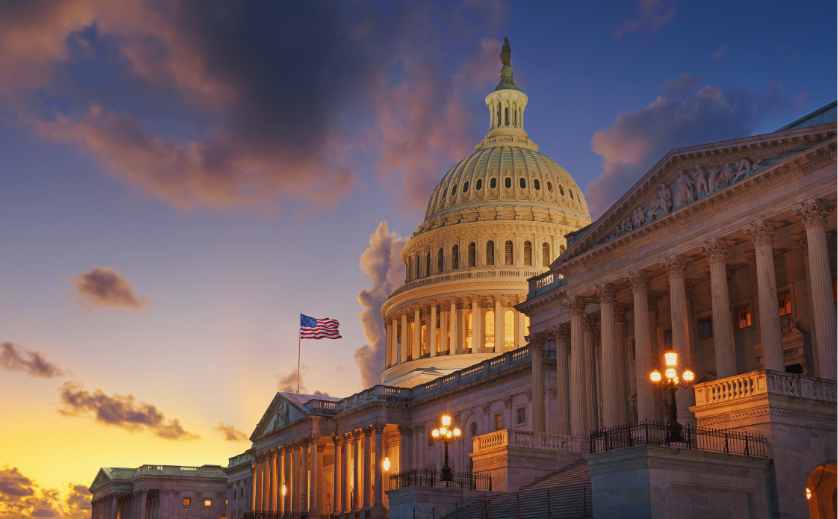
Trump’s return may reshape business with deregulation, tax cuts, and “America First” policies—potential market and trade impacts explored.
Trump’s second term is poised to leave a strong mark on the business landscape, with an emphasis on deregulation, tax cuts, and an “America First” agenda. With Republican control in Congress and a conservative Supreme Court majority, changes in fiscal, regulatory, and trade policies appear more feasible than ever. In this piece, CIL explores how these shifts could shape markets, impact key sectors, and alter global trade dynamics in the coming years.
Platform and policy plans
Trump’s platform emphasizes reduced bureaucracy, tax cuts, and a prioritization of domestic interests, with policies aimed at strengthening domestic industry, tightening immigration and resetting international engagement. These policies are similar in spirit to those in his first term, but have a stronger chance of implementation as his cabinet is expected to include more loyalists, rather than traditional figures in the Republican Party.
Election outcome and implications
With Republican control of the Presidency, Senate, and likely the House, as well as a conservative leaning Supreme Court majority, the administration is well-positioned to pursue significant policy shifts. If Republicans vote as a unified bloc, substantial changes could occur before the 2026 midterms. The Senate filibuster rule will still require bipartisan support for certain measures, but the Republican’s majority in every branch enables the opportunity for major legislative initiatives.
Market impact
Initial market reactions have been positive, particularly in sectors expected to benefit from deregulation and favorable policies. Key equity indices rose sharply in the days following the election with the S&P 500 closing up 2.5%; the Russell 2000 closing up 5.8% and Nasdaq closing up 2.9%
European equities, however, remained flat, likely reflecting caution over proposed US tariffs. This suggests global markets are wary of trade and foreign policy shifts, even as US markets anticipate gains from tax cuts and deregulation.
Investor sentiment in M&A is strong, with public large-cap private equity firms (e.g., KKR, Blackstone, Apollo) seeing record-high share prices. Tax cuts and deregulation are viewed as credible, likely enhancing equity returns. However, proposed tariffs haven’t been fully factored in, and a potential blanket tariff of 10-20% on all imports, and higher for certain countries and goods, could prompt retaliatory measures, disrupting global trade as well as stoking inflation.
Treasury yields indicate expectations of higher inflation, with 10-year yields reaching levels not seen since July, spurred by Trump’s proposed fiscal policies.
Outlook for business
We expect the election outcome to be broadly positive for markets in the near term. Tax cuts and deregulation are expected to spur economic growth, particularly benefiting sectors like industrials, finance and energy. However, proposed tariffs could impact sectors reliant on international trade, such as consumer goods.
In the medium-to-long term, the combination of tax cuts and tariffs could drive inflation, potentially slowing the Federal Reserve’s rate-cutting trajectory. While tax cuts may support short-term growth, they are likely to increase federal debt, which could eventually lead to higher borrowing costs as markets reassess the risk profile of US Treasuries.
Sign up to our mailing list to receive our latest insights.